
If you want to know how to make a boring niche profitable for affiliate marketing, start with the problem your reader has and set the niche aside. A person searching for a fix to a leaking tap, a slow laptop or a stack of unfiled receipts is not looking for entertainment. They want the problem gone, and that motivation is what turns a visit into a purchase. This article walks through building one page that takes a reader from that problem to a specific product.
The build in five moves: problem, buyer, product, proof, next click
The page follows five moves, in this order:
- Problem: the plain, specific thing the reader is trying to fix, stated in their words.
- Buyer: the person who has that problem and is ready to choose a solution, as opposed to someone who is only curious.
- Product: one recommended product that fits that buyer, with a clear reason it fits.
- Proof: dull, checkable detail that shows the product doing the job.
- Next click: where the reader goes after reading, whether to the merchant or to a supporting post.
A dull niche works well here because the order is easy to keep. Nobody reads a page about descaling a kettle for the writing. They read it to descale the kettle. Every paragraph either moves them toward a fixed kettle or it does not belong.
You are building one page, not a site. Get that single page right and you have a template for the next one.
Find the unglamorous problem your reader is already trying to fix
A niche is a category, such as “water filtration” or “home bookkeeping.” A problem is a sentence a person types or says out loud: “my tap water tastes like chlorine” or “I don’t know which receipts I need to keep for tax.” Your page needs the sentence, not the category.
Write the problem as a job the reader wants done. The format is: I want to [do something] so that [result], but [obstacle]. If you cannot fill in all three parts, the problem is still too vague to build a page around.
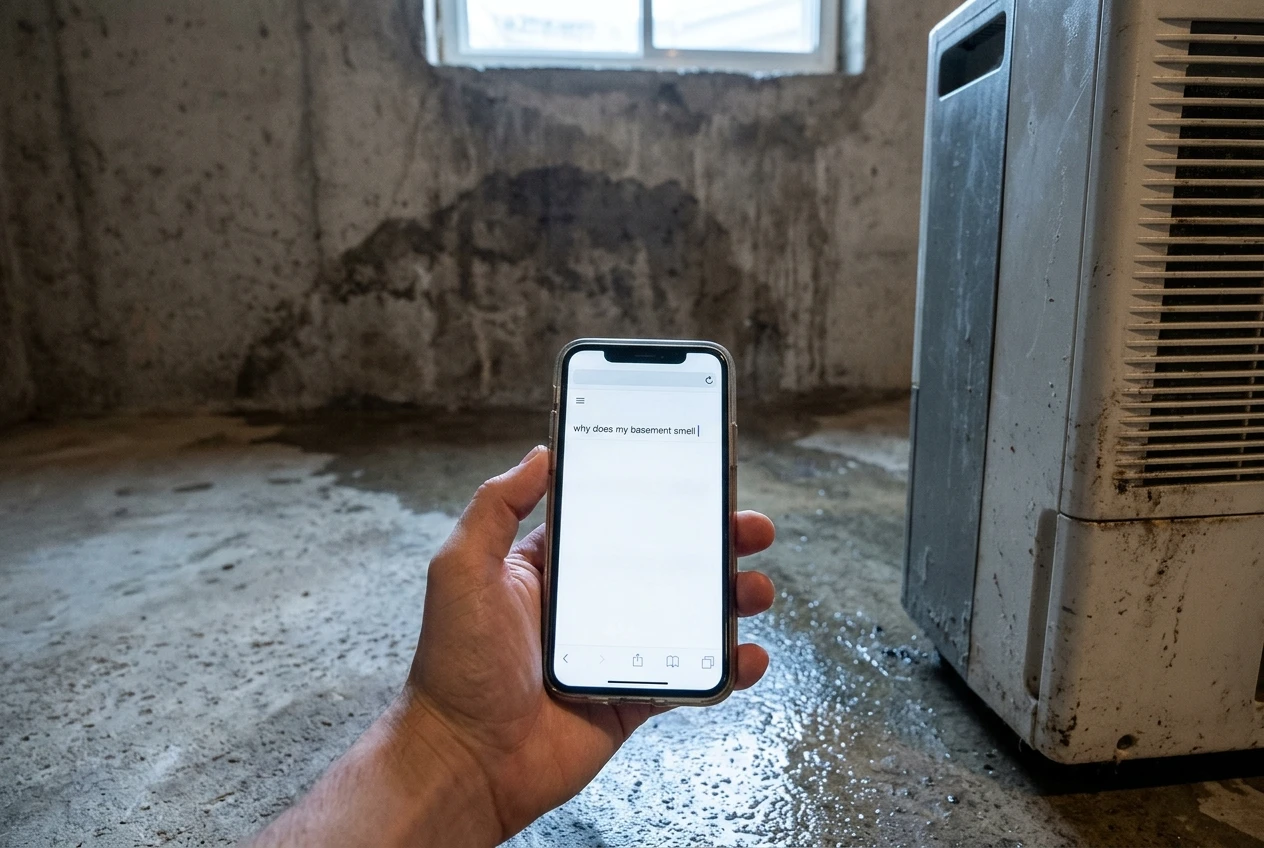
You can find these sentences without any special software:
- Search suggestions: type the start of a question about your niche into a search engine and note the completions. They are real phrasing from real searchers.
- Forum and community question titles: people describe their problems in plain words when asking for help. Read the titles first, then the replies.
- Retailer reviews and question sections: the complaints in middling reviews and the questions under a product tell you what buyers were unsure about before and after purchase.
- Your own questions: if you have bought anything in this niche, what did you need to know and could not find? Only use this if it is true for you.
Pick the problem with the clearest symptom. “Musty smell in the basement after rain” has a symptom, a trigger and a place. “Home comfort” has none of those. The more specific the symptom, the easier it is to match one product to it, and the easier it is for a searcher to recognise your page as theirs.
Check the problem against one test: would a stranger with this problem be willing to spend money today to make it stop? A mild curiosity does not pass. An ongoing annoyance with a deadline, a cost or a daily irritation does. Boring niches are full of problems that pass.
Pick the one decision page that sits closest to the purchase
Most niches support several kinds of page. Some answer early questions (“what causes this?”), and some answer the last question before buying (“which one should I get?”). Build the last kind first, because it sits closest to the commission.
Three formats usually fit a decision page:
- A “best for” page: “Best [product type] for [specific situation].” It works when the reader needs help choosing among several options.
- A comparison page: “[Product A] vs [Product B].” It works when readers already have two names in mind.
- A single-product review: it works when people search for one product by name and want to know if it is right for them.
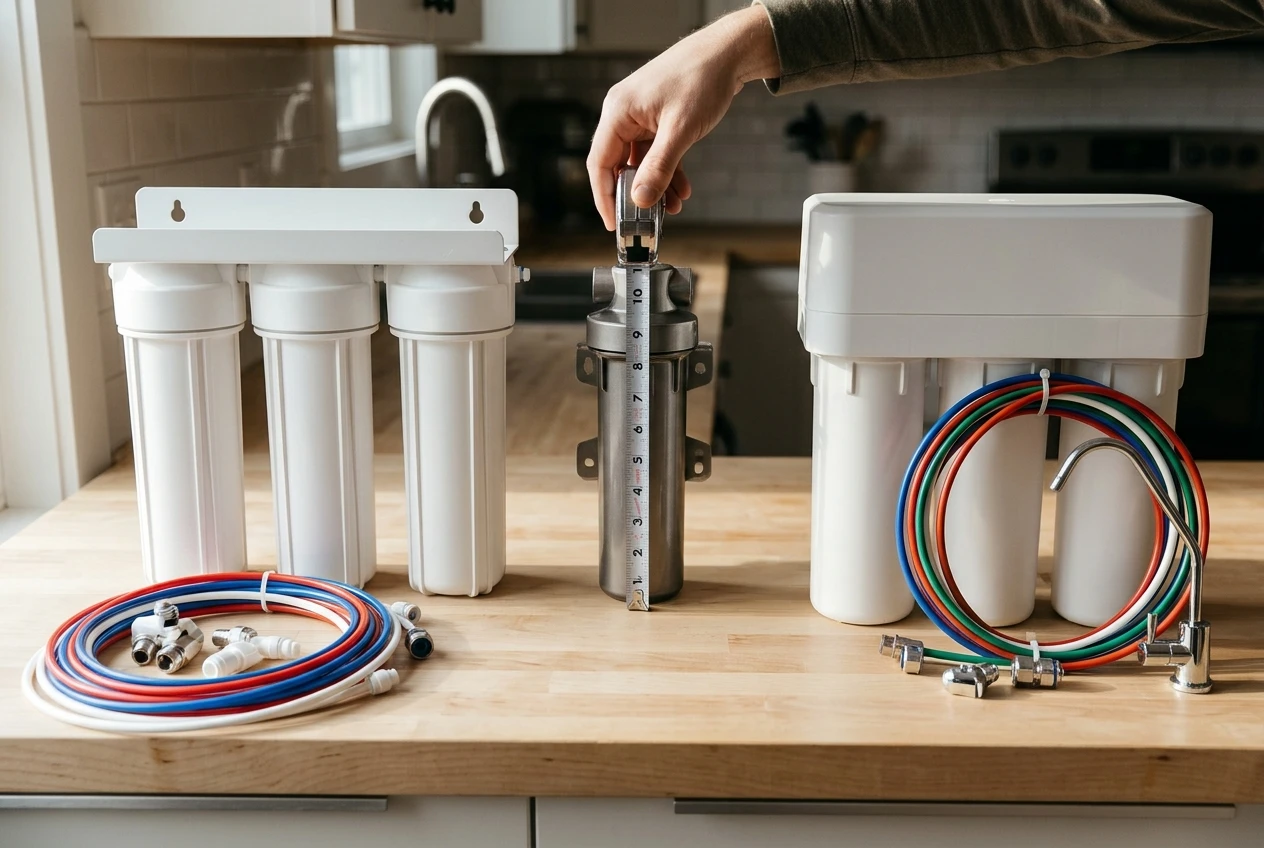
For a first page in a dull niche, the “best for” format with a narrow situation tends to be the most useful, because the narrowness lets you commit to one recommendation instead of listing ten. A page titled “best water filter for well water with a sulfur smell” can recommend one thing with confidence. A page titled “best water filters” cannot.
What the page contains
Keep the structure plain and put the answer early:
- The problem in the first lines: repeat the reader’s own wording so they know they are in the right place.
- Who this is for, and who should skip it: a sentence each. Telling some readers to look elsewhere makes the rest of the page more believable.
- Your recommendation: name the product and give the main reason it fits this problem.
- How to decide: two or three criteria the reader can check against their own situation, such as size, compatibility, or ongoing cost.
- What it costs and where to buy: tell the reader to check the merchant’s page for the current price, since prices change.
- Your link: placed after the reader has the information they need to choose.
Which product you recommend depends partly on the program behind it. If you have not settled that yet, the post on choosing your first affiliate program when you have no audience covers what to check before you commit a page to one merchant.
Disclose your affiliate relationship clearly on the page, in line with the program’s terms and the rules where you publish. A short, plain sentence near the top is enough.
Replace excitement with proof: how to show the product working in dull detail
A dull niche cannot win with enthusiasm, and it does not need to. A buyer with a practical problem trusts specifics: dimensions, steps, limits, time required. Adjectives like “amazing” and “game-changing” carry no information, so replace each one with a fact.
Compare these two statements:
- “This filter is incredibly easy to install.”
- “The filter attaches under the sink with two hose connections and the manufacturer’s instructions list the tools needed.”
The second one lets the reader judge for themselves. Write that kind of sentence wherever you would otherwise reach for an adjective.

Be honest about what you know
Proof only counts if it is true. Describe only what you have used yourself or what you can source and attribute. If you have used the product, describe the actual process: what you did, in what order, and what you noticed. If you have not, say so, and build the page from the manufacturer’s published specifications, clearly labelled as such, along with the points that buyers raise in reviews. A page that admits where its information comes from is more trustworthy than one that implies hands-on use it cannot back up.
Kinds of dull proof that help a buyer
- Specifications the buyer will check: size, capacity, compatibility, warranty length, as stated on the merchant’s page.
- The sequence of use: the real steps from unboxing to the problem being solved, in a numbered list.
- Limits: what the product does not do, what it will not fit, and what it needs besides itself (batteries, a subscription, a tool).
- Running costs: replacement parts or recurring fees, with a note to confirm current figures with the merchant.
- A comparison table: two or three options in rows, with the criteria you named earlier as the columns.
- Photos or screenshots you took yourself: include them only if they are yours. They show the product in context, which stock images cannot.
A table is often the most useful single element on a decision page, because the buyer can scan it against their own situation in a few seconds. Keep the cells factual and keep your opinion in the sentences around it.
Link the supporting posts so the page keeps getting visitors
A decision page rarely attracts visitors by itself at the start. Supporting posts bring readers in earlier in their search and send them toward it. Each supporting post answers one narrower question and links to the decision page where it fits naturally.
For the water filter example, supporting posts could be “why does well water smell like sulfur,” “how to test your water at home,” and “how often to change a filter cartridge.” A reader of any of those has the same underlying problem, and each post can point them to the page that helps them choose.

Two existing posts help with this stage:
- Before writing the supporting posts, look at what other sites already cover. The guide on analyzing your affiliate competitors shows how to spot the questions they leave unanswered, which are good topics for supporting posts.
- When you write the link to the merchant or to the decision page, the wording matters. The piece on the click psychology behind high-performing affiliate links covers how link text and placement affect whether readers click.
Link in both directions. Supporting posts point to the decision page, and the decision page points to the supporting posts that answer related questions, such as a “how to install it” guide for readers who have chosen. The reader who is not ready to buy then has somewhere useful to go, and the reader who is ready is not delayed.
Use descriptive link text, such as “how to test your water at home,” instead of “click here.” It tells the reader and the search engine what they will find.
Check and refresh the page when the product, price or reader question changes
A decision page is only useful while its details are correct. Products are discontinued, prices move, models are replaced, and affiliate programs change their terms. A page that recommends something no longer sold sends a ready buyer away with nothing, and earns nothing.
Set a regular review date for the page and check these items each time:
- The product: is it still available, and is it still the same model you described?
- The price and any offer: do the figures and claims on your page match what the merchant shows now?
- The program terms: is your link still working, and does the program still pay on this product?
- The reader’s question: search for the problem again. Do the suggestions and top results now frame it differently from when you wrote the page?
- Your supporting posts: do they still link to the decision page, and does the decision page still link back to them?
Update the text where something changed, and note the date of the review on the page so readers can see it is maintained. If a better product has appeared for this problem, say so and move your recommendation.
If you have several posts already published, the guide on auditing your own posts for affiliate links you forgot to add gives a method for going through them and finding where a link to your decision page belongs.
Choose the niche you were about to give up on, write down the single problem its reader wants solved, and draft just the decision page for it before you plan anything else.