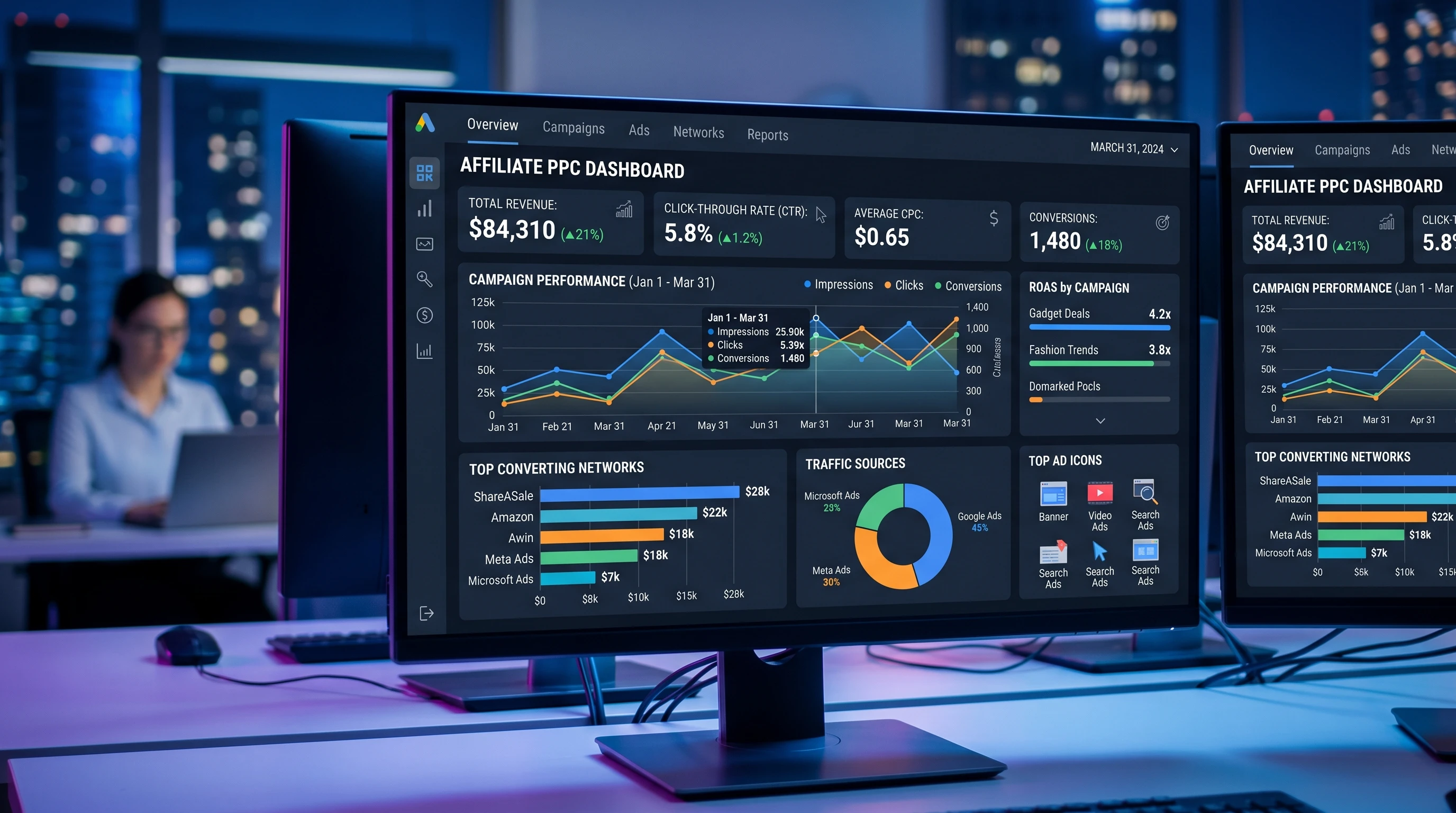
Pay Per Click (PPC) advertising is all about putting your offer in front of people who are ready to click, buy, or take action. For affiliates, PPC has a lot of appeal; you can reach targeted audiences fast, test offers easily, and scale what works. At the same time, it can get expensive if you don’t have a clear plan, and there’s definitely a learning curve if you’re new to the world of online ads.
Whether you want to drive traffic to affiliate offers with Google Ads, Bing Ads, or social media ads, it’s really important to know what works, what doesn’t, and how to avoid common mistakes that eat up budgets without bringing results. I’ve learned a lot through my own experiments, and I’m laying out everything I wish I knew when I started.
What Is PPC Affiliate Marketing?
PPC affiliate marketing means you pay for ads (like Google Ads or Facebook Ads) to send visitors to your affiliate links. If people click your ad, land on your page, and take the action (like buying something or signing up), you earn a commission.
How PPC Works For Affiliates
- You choose a product or service to promote (usually from an affiliate network).
- You create ads and bid on keywords or placements that match what buyers are searching for.
- People see your ad; when they click, they’re taken to your landing page or directly to the merchant’s site, depending on the rules.
- If the visitor converts, you get paid a commission according to the affiliate program’s terms.
PPC lets you control your budget and see results quickly compared to SEO. There is, however, more risk upfront since you’re spending money on ads.
PPC Networks Affiliates Use Most
You have several ad networks to choose from when launching PPC campaigns as an affiliate. Here are the most popular options:
- Google Ads: The biggest PPC platform, with access to search and display across millions of sites. Super competitive for mainstream products but great for reaching people actively searching.
- Bing Ads: Smaller scale but less expensive clicks, often with an older audience.
- Facebook & Instagram Ads: Best for interestbased targeting and visual offers. You can target people based on demographics, interests, and behaviors.
- Native Ad Networks (Taboola, Outbrain): Your ads appear as articles or recommendations on publisher sites. Good for contentdriven landing pages.
- Other Platforms: Pinterest, Twitter, and TikTok can work for certain niches, especially with visually engaging offers.
You can use one option or mix a couple, depending on where your target audience is hanging out and the products you’re promoting. Each platform has unique strengths, so it can pay to test a few before going all in.
Picking The Right Affiliate Offers For PPC
Not every affiliate offer is a good match for PPC. I’ve found it pays off to be pretty picky when selecting what to promote with paid ads.
Look For Offers That Convert Well
- Highconverting landing pages (quick, clear, and mobile friendly).
- Competitive commissions (enough to cover your ad spend and leave profit).
- Strong brand reputation (better trust means better conversion rates).
- Clean affiliate program policies on paid traffic (make sure you’re allowed to run PPC; many programs have rules about brand bidding or direct linking).
I recommend looking for affiliate products with at least a 3% conversion rate and commissions that let you double or triple your investment after ad costs. Some niches, like finance, insurance, or software, have tough competition but pretty big payouts. Others, such as hobby gear or niche courses, have lower competition but may need higher volumes to make great money. Take some time to really research what fits your style and risk tolerance.
Building Effective Landing Pages for PPC
PPC ads often send users to a landing page instead of straight to the merchant. A landing page helps warm up visitors, build trust, and improve conversion rates. Plus, it keeps you in line with many ad network rules. Crafting a stellar landing page can really give your campaign a boost, making each click count more toward your bottom line.
Good Landing Page Elements
- Clear, specific headline about what’s being offered.
- Benefitfocused copy that speaks to the visitor’s needs.
- Strong call to action (button or form that stands out).
- Trust signals like testimonials, reviews, or guarantees.
- Mobile optimization so it looks great on all devices.
Even if you’re just sending users to a review or comparison page, keep things simple and focused on helping people decide quickly. Split testing headlines and calls to action can really boost your results. Don’t forget, a fastloading page helps keep potential customers engaged and less likely to bounce.
Keyword & Audience Targeting Tips
Getting targeting right is pretty important for affiliate PPC. Broad targeting usually means wasted spend, while super narrow targeting can leave you with few impressions. Striking the right balance ensures your ads reach people who are most likely to convert.
Keyword Targeting
- Use buyerintent keywords—like “buy [product],” “[product] review,” or “[service] coupon.” People searching with these terms are ready to take action.
- Negative keywords filter out irrelevant searches and save your budget.
- Longtail keywords generally have less competition and cheaper clicks.
Audience Targeting
- On Facebook or native ads, build audiences based on interests, demographics, or behaviors that match your offer.
- Retargeting lets you bring back visitors who clicked but didn’t convert. It’s often way cheaper than reaching new audiences.
Review your targeting regularly and don’t be afraid to test new angles if you’re seeing a low clickthrough or conversion rate. Over time, you’ll spot which segments of your audience are giving you the best return.
Managing PPC Budget & Bids
PPC budgets can get out of hand if you’re not on top of the numbers. I always set strict daily budgets as a beginner and avoid scaling up until I see real conversions. Keeping a close eye on your numbers prevents expensive mistakes and helps your profits grow sustainably.
How Much To Spend?
- Start small—even $10–20/day is enough to collect early data.
- Only scale up after at least 2 or 3 confirmed affiliate sales and a clear view of your cost per acquisition (CPA).
- Keep close track of ad spend vs. payouts to avoid spending more than you earn.
Bid Strategies
- Manual CPC bidding gives more control as you’re learning, so you can avoid overpaying for clicks.
- Automated bidding is useful once you’re confident in keywords and landing pages, as the system can optimize for conversions.
If an ad set is burning through cash with no conversions, pause it and review your keywords, ad copy, or landing page. The numbers don’t lie, so always be ready to make changes based on the data you see.
Staying Compliant With Networks & Affiliate Programs
Ad networks and affiliate programs come with rules that can affect your campaigns, and breaking them can get you banned pretty fast. Always read the terms for both your ad platform and your affiliate program. It’s not worth losing access to a money making platform just because of a simple mistake.
- Check if direct linking is allowed. Some programs require a bridge landing page.
- Don’t bid on brand terms unless the program says it’s okay.
- Be honest in your ad copy, and avoid false claims or “too good to be true” offers.
- Follow ad platform rules (Google is strict about quality scores, Facebook flags certain niches like health or finance).
If you’re not sure about a rule, reach out and ask. Quick clarifications can save you a lot of grief in the long run. Better safe than sorry when it comes to account security and staying in good standing.
Tracking Results & Optimizing Your PPC Campaigns
Tracking is pretty much the foundation of successful affiliate PPC marketing. If you aren’t tracking what’s working, you’re flying blind. Having the right tracking setup turns guesswork into real, actionable strategy.
- Use tracking software or pixels to monitor clicks, conversions, and sales.
- Compare ad, landing page, and keyword performance to spot what’s profitable.
- Test new ad copy, images, or landing pages often. The biggest wins usually come from split testing and small tweaks over time.
The more closely you track everything, the faster you’ll spot what works, what’s burning through your budget, and where to focus your efforts next. Set aside some time each week to review reports and plan your tweaks.
Common Questions & Troubleshooting
“What’s a good ROI on PPC for affiliates?”
I aim for a 2–3x return on ad spend (ROAS) so if I spend $100, I want at least $200–300 in payouts. Higher is possible with exclusive offers or if you have a unique angle, but be realistic at the start.
“I keep getting ad disapprovals. What can I do?”
- Double check the ad platform’s guidelines for restricted content.
- Make sure your landing page and ad copy match and deliver exactly what’s promised.
- Contact support if you think your ad was flagged by mistake.
“How can I lower my cost per click or acquisition?”
- Improve ad relevance and quality scores.
- Focus on longtail keywords or fresh audiences.
- Tweak landing pages for faster loading and better conversions.
Don’t get discouraged by early setbacks; patience and small, steady improvements will get you to your goals much easier than chasing after quick wins.
Quick Action Plan For Affiliate PPC Success
- Pick a highconverting affiliate offer that matches paid traffic rules.
- Choose the right ad network for your target audience.
- Build or improve your landing page for strong, clear conversions.
- Start with low daily budgets and optimize based on tracked performance.
- Regularly review and test new ads, targeting, and offers to grow profits.
PPC affiliate marketing isn’t a “set and forget” thing. With the right mix of research, tracking, and tweaking, it’s a pretty exciting way to grow your affiliate earnings. If you have any burning questions or stories from your own PPC adventure, drop them in the comments—I’m always up for chatting shop or troubleshooting together. Keep optimizing and good luck getting those conversions! If you have any questions about what was discussed above I would be happy to discuss in the comments below.